
News and Information
- Another top Sino-foreign cooperative college was called off! Some start building walls, China is still building bridges
- AI giants earn a monthly salary of 30000 to rob "tiankeng professional" graduates! Huang Renxun's prediction came true
- What exactly does the "prefabricated" education hurt?
- Do you want to start with Olympiad or not? We asked the Olympic champion.
- The myth of Silicon Valley dropout deceives the world. They make you believe that universities are useless, but they are crazy about famous universities.
- AI is coming, can universities still be "too big to fail?
- From "stunting" to Harvard graduation, she used decades of research to reveal that it is not IQ and EQ that determine a child's future and happiness.
- Deng Yu, 37, won the Fields Medal: It is the most rewarding research that has not been done before.
- Hong Kong's eight major graduate salaries exposed! Three years "back to this", god professional graduation to get 550000
- Cambridge University in plagiarism scandal, the youngest black professor overturned?
- Chinese cities are vying for universities on the global stage.
- The best primary and secondary schools in Hong Kong have also begun to rob people all over the world.
- China's STEM education makes Americans feel anxious
- "The National People's Congress revoked Jiang Fangzhou's master's degree" and hoped that the punishment of academic misconduct in colleges and universities was just the beginning.
- Breaking News! Study in the United States earthquake! International students can only stay in the United States for 4 years?!
- Cambridge scans the brains of 10,000 children: summer vacation does not decline, just do one thing
- After the evaluation of associate professor, college teachers began to "lie flat"
- APL Housing Subsidy Cancels Tuition Soars, Is Your Budget Enough to Study in France?
Contact Us
Email: HK_VCM@outlook.com
Address: Victoria Institute of Business Administration, Hong Kong
Information Details
Chinese cities are vying for universities on the global stage.
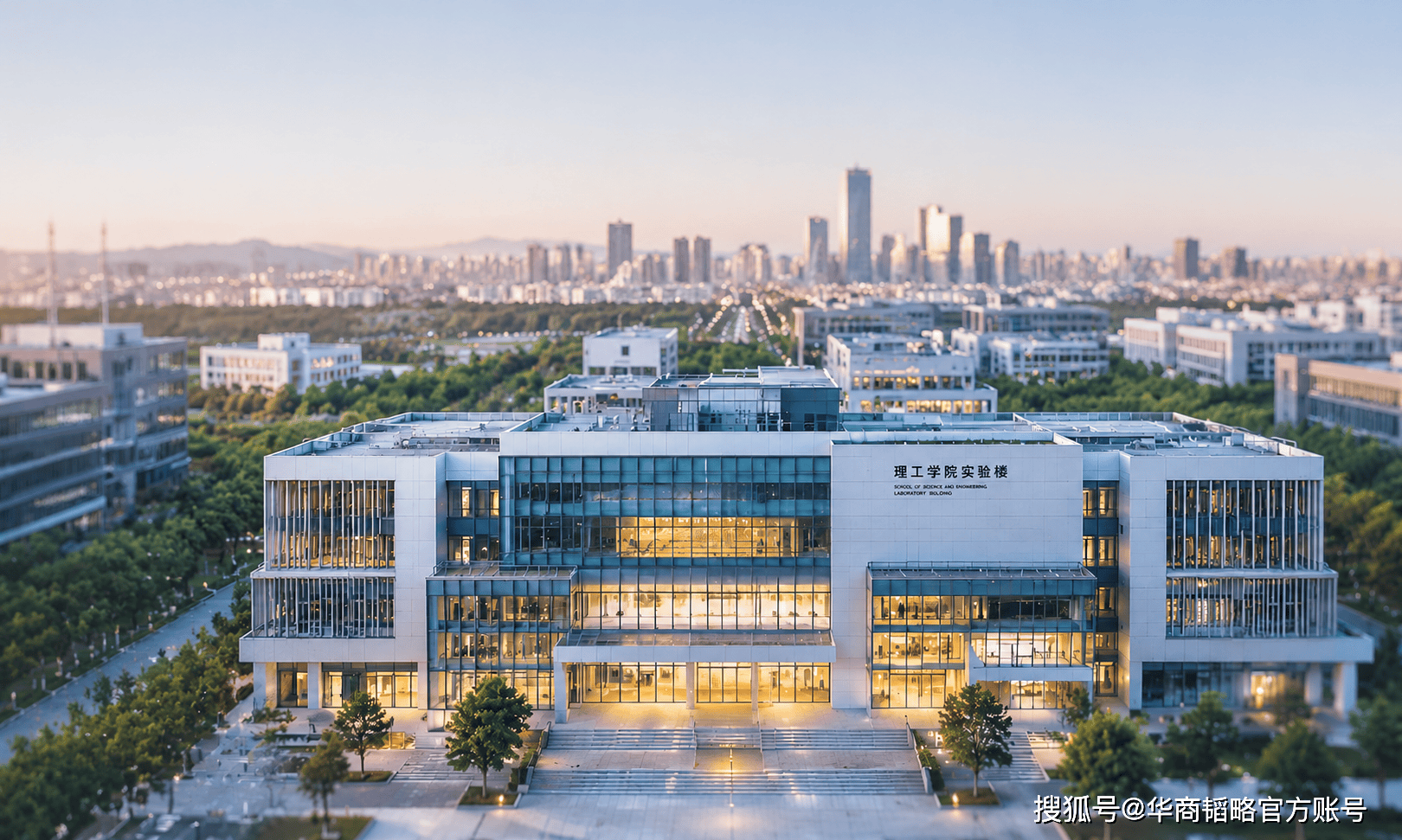
With overseas universities increasingly entering the market and domestic student enrollment continuing to decline, Chinese universities are undergoing accelerating polarization. This is a challenge for the university itself, and equally a challenge for the cities of the future.
Wen | Chinese Merchants Strategy Yang Peter
In 2026, overseas universities are rapidly expanding into China.
From the United Kingdom to France, Singapore, Russia, and other countries, a number of universities have established campuses in various Chinese cities through joint-venture educational programs.
What seems to be the expansion in the field of education is actually behind it.A city race around talent, industry and future competitiveness.
[01 University Expansion]]
In May of this year, the Ministry of Education updated the list of newly approved Sino‑foreign cooperative institutions and programs for 2026, approving a total of 219 such entities in a single round, including 86 new institutions and 133 new programs.
This is a new high for a single review in recent years,The number is nearly double that of the same period last year.
Most notably, the ranks of overseas universities entering China have expanded significantly.
British universities have become the largest participants. In this round of newly established educational institutions, approximately 50 are jointly established with the participation of UK universities, involving 30 British universities. Institutions such as the University of Leeds, the University of Liverpool, Lancaster University, and Queen Mary University of London are all included.
Meanwhile, in addition to traditional partners such as the United Kingdom and the United States, universities from France, Singapore, Russia, Spain, Hungary, Cuba, and other countries have also joined, further expanding cooperation to regions including Central and Eastern Europe, Southeast Asia, and Latin America.
The level of participation by domestic universities is also increasing.
In the past, Sino‑foreign cooperative education was largely concentrated on international programs at select universities. Nowadays,985 colleges and universities are coming in intensively.
For example, Beijing Institute of Technology and Turin University of Technology in Italy jointly established the Beili Turin Institute of Technology, Sichuan University and the University of Auckland in New Zealand established Auckland College, Harbin Institute of Technology and Lyon Business School in France jointly organized the Lyon Data Science Institute.
Among the 133 newly added projects, 15 involve universities designated as part of the “985 Project,” including Zhejiang University, Renmin University of China, Chongqing University, Tongji University, and others.
What has become even more evident is the direction of cooperation.
In the past, business and management programs enjoyed a strong presence in Sino‑foreign cooperative educational initiatives. However, this round of expansion places greater emphasis on emerging engineering disciplines and cutting-edge technologies. According to an analysis of publicly available lists, in this round of newly added programs, science and engineering disciplines account for roughly two-thirds, with hard‑tech fields such as artificial intelligence, data science, intelligent manufacturing, and biomedical engineering emerging as key priorities.
Multiple new agencies directWrite "Smart" "Future Technology" to the name. For example, there are the Grodno Institute of Intelligent Science and Engineering at Qilu Normal University, the Sino-Italian Future Intelligent Engineering College at Shandong University of Technology, and the Shenzhen Institute for Future Technologies jointly established by Tianjin University and the Hong Kong Polytechnic University.
At the same time, many undergraduate institutions and projects adopt the "4 0" double degree model. Students can complete their entire program of study in China and, upon meeting the requirements of both institutions, earn dual Chinese–foreign degrees. This model of “internationalization at home” lowers the geographic barriers to accessing international education.
Another change in this round of expansion is that the scope of cooperation is broadening.
This round of newly established institutions and projects spans more than 20 provinces nationwide, with deployments in traditional higher‑education hubs such as Beijing and Shanghai, while also expanding further into industrial cities like Shenzhen, Suzhou, and Foshan.
Notably, Shandong added 27 new institutions and projects, while Hubei added 21, making them the two provinces with the largest expansions.
From the entry of overseas universities, to the participation of 985 universities, and then to the mainstream of hard science and technology majors, Sino-foreign cooperation in running schools is changing from international education projects in the pastNew tools for cities to compete for talent and industrial competitiveness.
Why did the city rob?]
Over the past few decades, the rules of urban competition in China have been straightforward: attracting investment, vying for businesses, and competing on GDP growth. The city that can attract more factories and corporate headquarters will take the lead.
But after entering the stage of industrial upgrading, the city has found a problem,Enterprises can introduce, talent is difficult to copy.
Shenzhen is home to tech giants such as Huawei, Tencent, and DJI, and has ranked first nationwide in PCT international patent applications for many consecutive years; however, its higher‑education resources have long been a weak point. By the end of 2025, Shenzhen’s regular institutions of higher education had 187,700 students; in the same year, Guangzhou alone enrolled 1.5867 million undergraduate and associate-degree students in regular (including vocational) programs, along with an additional 191,200 graduate students.
Beyond Shenzhen, this misalignment between industrial strength and higher‑education resources is also evident in manufacturing powerhouses such as Dongguan, Foshan, and Nantong.
Take Foshan as an example. This manufacturing hub, whose GDP has surpassed one trillion yuan, is home to more than 10,000 industrial enterprises above designated size and boasts two trillion-yuan‑level and ten hundred-billion‑yuan‑level industrial clusters. In 2025, Foshan’s industrial robot output exceeded 46,000 units, up 29.6% year on year.
Although Foshan has introduced South China Normal University, Southern Medical University and other university campuses, there are no 985, 211 or "double first-class" universities in Foshan's local universities, and there are still many high-level higher education resources.Relying on off-site universities to set up campuses.
According to a June 2025 compilation by ShanghaiRanking, among China’s 27 trillion‑yuan cities at the time, 13 lacked a standalone 985 university, while seven—Quanzhou, Yantai, Tangshan, Dongguan, Changzhou, Nantong, and Foshan—did not have a standalone “Double First-Class” institution.
Over the years, the primary strategy cities have employed to address talent shortages has been “poaching” talent. Offering household registration, subsidies, and housing benefits, cities such as Wuhan, Xi’an, and Chengdu have all joined the competition. But nationally, this is morea stock gameIt is difficult to form a stable and continuous talent supply.
The talent required for industrial upgrading is also difficult to secure through piecemeal recruitment. A robotics industry cluster spans multiple disciplines, including algorithms, mechanics, control systems, and materials, and requires a steady influx of talent at all levels. Poaching a few engineers with subsidies can only provide a temporary fix.
Building a world-class university, too, cannot be rushed. A campus can be built in a few years, but the development of disciplines, faculty, and research platforms requires long-term, sustained effort. The Southern University of Science and Technology has already become emblematic of the “Shenzhen Speed”; yet, despite Shenzhen’s decision to establish SUSTech in 2007 and its official approval in 2012, it still took 15 years—until 2022—before the university was included in the national “Double First-Class” initiative.
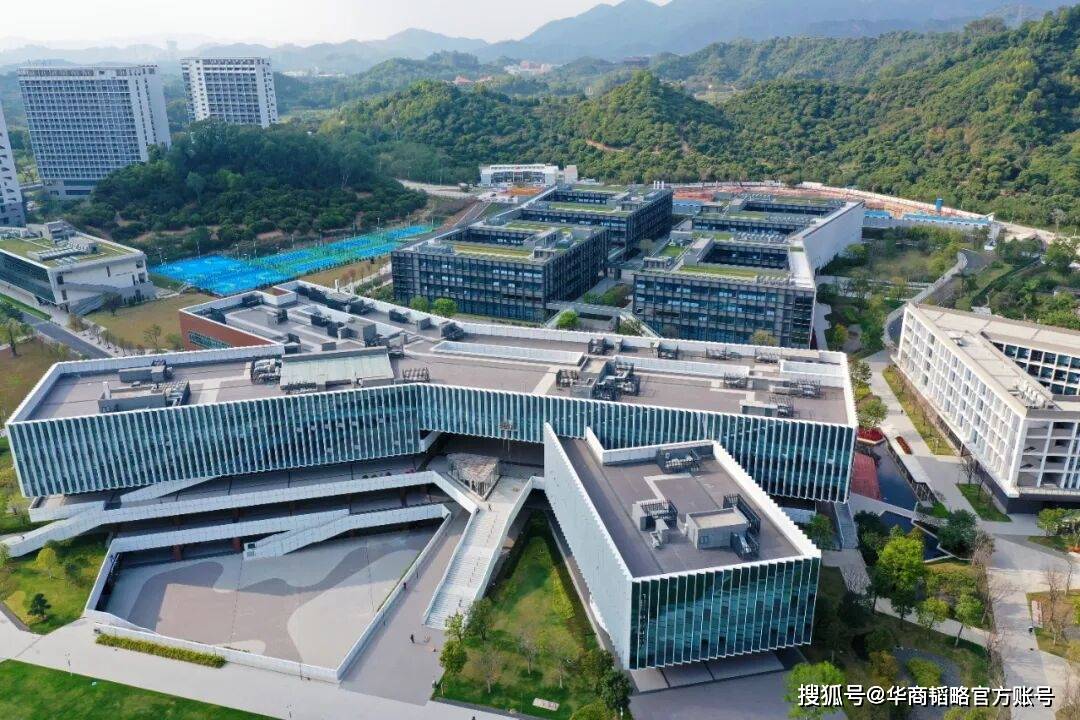
For many cities that cannot afford to wait, tapping into established international university resources is clearly a faster path forward.
From the University of Nottingham Ningbo and XJTLU to New York University Shanghai and Duke Kunshan University, cooperation between Chinese cities and international universities has spanned more than two decades, and has already provided initial evidence of the value of this approach.
Today, this cooperation is entering a new phase. The introduction of universities in cities has gone beyond education itself and is beginning to pointTalent supply, scientific research innovation and industrial upgrading.
New engine of industrial competition]
As universities are situated within the framework of industrial upgrading, their role in the city has likewise undergone transformation.
First of all,Universities are beginning to become industry co-Builders.
In the past, universities cultivated talent, while companies recruited graduates during the graduation season. Today, companies are engaging with universities at an earlier stage, participating in the entire talent-development process—from program design and curriculum development to internships and career placement.
The Hu Lake School of Pharmaceutical Sciences at XJTLU is a prime example. The college was jointly established in 2020 by XJTLU and Suzhou Industrial Park, with its academic programs centered on the park’s biopharmaceutical industry. An industry development advisory committee, comprising representatives from companies such as Ascend Pharma and Innovent Biologics, participates in the academy’s program‑development and curriculum‑design processes.
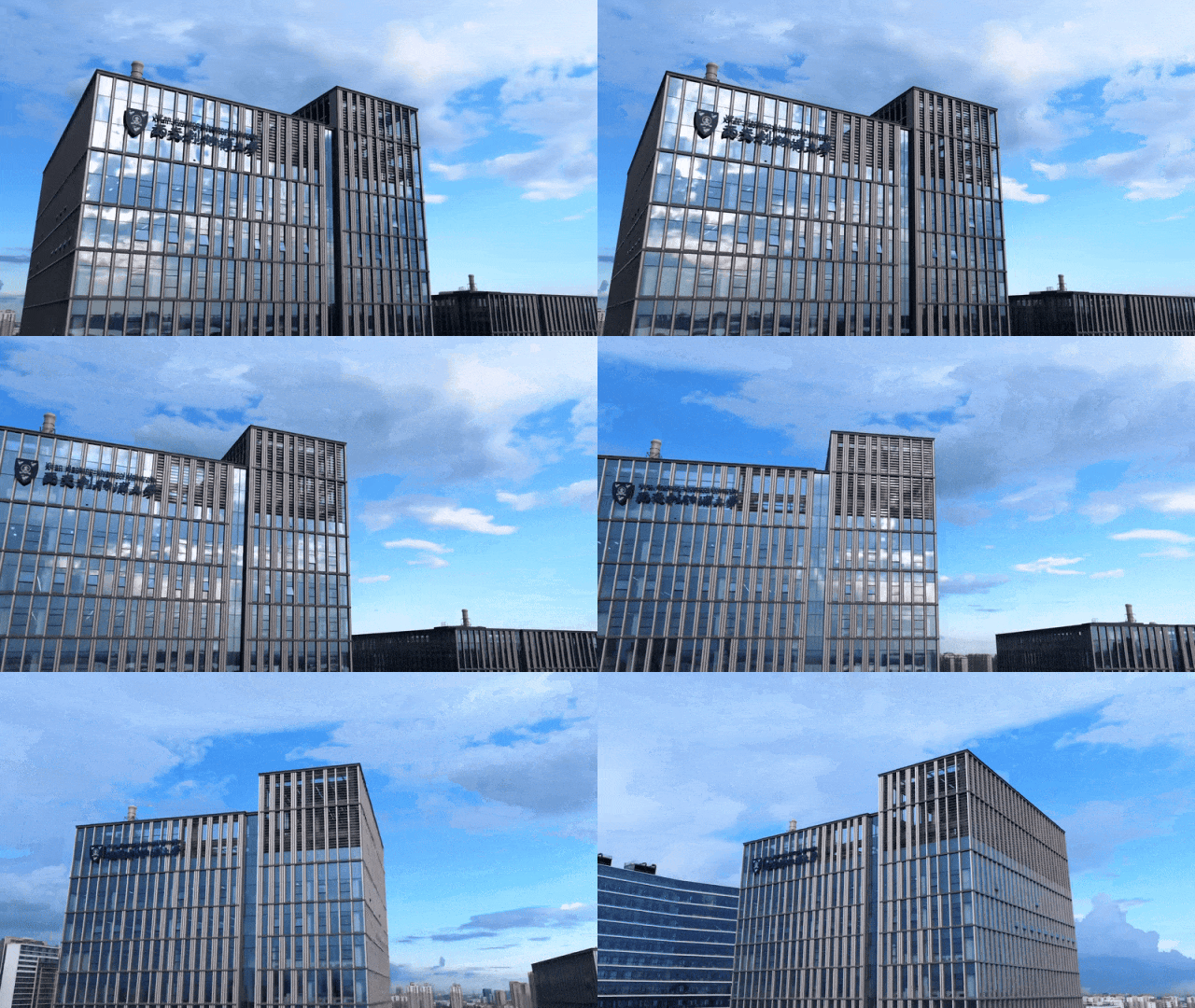
By its fifth anniversary in 2025, the college will have established partnerships with more than 60 enterprises. Among the three cohorts of master’s graduates, nearly 50% have chosen to remain in Suzhou, and 70% are contributing to the biopharmaceutical sector in the Yangtze River Delta region, gradually becoming a key gateway for talent into the local biopharmaceutical industry.
Similar changes have also been observed in Ningbo. In June 2026, Ningbo Vocational and Technical University, in collaboration with the University of Salamanca in Spain and the embodied intelligence company ZhiJi Dynamics, inaugurated the Salamanca Joint Institute of Intelligent Engineering and the ZhiJi Dynamics Industry Academy. The Zhujiji Dynamics Program integrates the full-scale humanoid robot Oli as a core teaching platform into the curriculum, bringing cutting-edge corporate technologies, equipment, and real-world projects into hands-on training.
Secondly,The university has changed from a teaching platform to an innovation platform.
In 2019, the Ningbo Municipal Government and the University of Nottingham in the United Kingdom signed a strategic cooperation framework agreement to jointly establish the “Excellence Lighthouse Initiative (Ningbo)” Innovation Research Institute. The following year, the project officially signed the implementation agreement. According to the construction plan announced at the time, the project’s total investment exceeds RMB 2.5 billion, with plans to build 130,000 square meters of research and supporting facilities. The initiative will focus on three key areas—intelligent manufacturing, green chemistry and energy, and life sciences and health—and will include laboratories, public‑service technical platforms, and university‑industry joint R&D platforms.
For Ningbo, which is home to a large number of manufacturing enterprises, such research institutes serve as an R&D platform open to the local industrial sector. For many small and medium-sized enterprises, establishing a fully independent research team is costly; however, they can leverage university platforms to tackle technological challenges and translate research outcomes into practical applications. As a result, the university has moved beyond the classroom and become an integral part of the city’s innovation ecosystem.
There's another important thing, too,Universities are becoming the city's interface to the world.
Duke Kunshan University was jointly founded by Duke University, Wuhan University, and the Kunshan Municipal Government. As of the end of 2024, the university’s Career Development Office has established partnerships with nearly 500 employers and maintains long-term collaborations with over 80 of them. Companies such as Google, Microsoft, and Tesla have all hosted on-campus or virtual recruitment sessions.
Leveraging the research resources of Duke University and Wuhan University, Duke Kunshan University continues to attract international students and faculty to Kunshan, while also establishing for this county-level city long-term channels of engagement with global universities, research institutions, and enterprises.
This value is difficult to quantify in the short term through enrollment numbers. As international students arrive in the city, overseas professors conduct research locally, and graduates go on to pursue further studies at institutions or take up positions in companies both at home and abroad, the city’s presence within global talent and innovation networks continues to grow.
When a company establishes itself, it typically brings factories, output value, and tax revenue; when a university takes root, it steadily accumulates talent, research achievements, and industrial resources, reshaping a city’s innovation capacity over the long term.
Therefore, this round of global competition for universities in Chinese cities is actuallydevelopment initiative in the coming decades.However, behind this competition, universities worldwide are themselves undergoing a profound reshuffling.
04 The Crisis and the Machine of the University]
Foreign universities are increasingly entering the Chinese market, largely because many European and American institutions are facing mounting financial pressures—some have even reached the brink of collapse.
The United States appeared first.Tide of College Closure. In 2024, Cabrini University and the University of the Arts in Philadelphia both closed their doors. The latter’s on-campus student population decreased from 2,038 in 2013 to 1,149 in 2023, a reduction of approximately 44% over the decade.
Since then, the wave of bankruptcies has continued. By 2025, at least 16 U.S. nonprofit colleges and universities have announced their closure. In April 2026, Hampshire College, founded in 1965, announced that it would close permanently at the end of the fall semester.
British universities are likewise under pressure. Data released by the UK Office for Students in 2026 show that, during the 2024–2025 academic year, more than one-third of higher education institutions in England reported budget deficits. By the 2025–2026 academic year, this proportion is projected to rise to 42.7%, meaning that four out of every ten institutions of higher education will be operating at a financial loss.
Behind these pressures,All can't get around the source.
In Canada, as of the end of September 2025, the number of individuals holding study permits stood at approximately 725,000, a decrease of more than 200,000 from the end of 2024. In Australia, the total number of international students in the first five months of 2026 decreased by 6.9% year on year. For educational institutions that are highly reliant on tuition revenue from international students, shifts in the global study-abroad market are posing new challenges.
As more and more students opt not to study abroad, overseas universities have been compelled to adopt a new strategy for recruiting students: establishing joint-venture programs that bring their curricula, faculty, and degree offerings directly to China. This approach allows us to both attract new students and generate revenue, while also gaining access to China’s research platforms, industrial projects, and local resources.
However, this has also intensified competition among Chinese universities.
In 2024, there were still 136,300 ordinary primary schools nationwide, a figure that declined to 128,300 in 2025. Meanwhile, the number of primary school enrollments dropped from 16.1663 million to 14.6174 million, a year-on-year reduction of 1.55 million. Elementary school students entering in 2025 will likely take the national college entrance examination around 2037, and the shrinking student pool will continue to exert downward pressure on universities.
The pressures of university have already begun. In 2025, the number of nationwide college entrance examination registrants fell to 13.35 million, a decrease of 70,000 from the previous year, bringing an end to several consecutive years of growth. In 2026, the number of applicants further declined to 12.9 million, a year-on-year decrease of 450,000, with the decline widening significantly.
Admissions pressure is increasingly concentrated among certain private institutions of higher education. In 2026, six private universities in Guangdong Province experienced unfilled quotas during the first round of admissions for the regular science stream, with a total shortfall exceeding 6,800 students. After the regular admissions process and the first round of supplemental admissions, Beijing still has 1,701 unfilled undergraduate‑level places, with nearly 98% of them concentrated at four private universities.
A relevant research report by the National People’s Congress also points out that, since the start of the 14th Five-Year Plan, enrollment at private higher education institutions has continued to weaken, and some institutions are facing the risk of a shortage of applicants. For private universities that are highly reliant on tuition revenue, persistent enrollment shortfalls could very well escalate from recruitment pressures into existential threats.
In fact, population decline is only one of the contributing factors. Tuition levels, program offerings, institutional quality, and employment prospects all influence the choices of students and their parents. Schools lacking distinctive disciplines, industry linkages, and clear pathways to employment will be the first to bear the brunt.
With overseas universities increasingly entering the market and domestic student enrollment continuing to decline, Chinese universities are undergoing accelerating polarization.
For cities, the introduction of universities is just the beginning, can it beform distinctive disciplines, embed local industries, leave behind talent, and transform results,That's what ultimately determines the quality of this competition.